Eminent Scholar program
What is the Eminent Scholar program?
The Eminent Scholar program brings distinguished full professors in construction engineering and management from peer institutions to the Del E. Webb School of Construction to foster meaningful collaboration, enrich scholarly exchange and highlight excellence within the discipline. Eminent Scholars are invited to an on-campus visit based on their exceptional academic achievements, leadership and impact on research and practice. The program provides a platform to showcase their career highlights and academic work and enrich the academic environment of the Del E. Webb School of Construction. Established through a generous donation from the Del E. Webb Foundation, the program confers upon each invited professor the honorary title of Eminent Scholar by the Del E. Webb School of Construction.
What is an Eminent Scholar visit like?
During a two-day visit, the distinguished professor engages in scholarly activities, including individual meetings with non-tenured faculty members, a classroom presentation, a public research seminar, a discussion session with doctoral students and meetings with faculty members and leadership from both the Del E. Webb School of Construction and the School of Sustainable Engineering and the Built Environment. Eminent Scholars can also request meeting with other faculty members or leaders at Arizona State University whose interests align with their own.
What are the benefits of hosting Eminent Scholars?
Hosting Eminent Scholars strengthens our academic community by creating opportunities for collaboration, networking and mentorship. Because only a few select full professors with distinguished careers are invited, the program brings high-level expertise and visibility to the Del E. Webb School of Construction. On-campus visits foster long-term professional and scholarly relationships, so each Eminent Scholar becomes a valued, enduring partner within our community.
Eminent Scholar visit November 9-10, 2026

Dr. Paul M. Goodrum, PhD, P.E., NAC
Professor and Kiewit Corporation Endowed Chair in Construction Engineering
Department of Civil and Environmental Engineering
Colorado School of Mines
Dr. Paul M. Goodrum‘s research focuses on construction productivity, workforce development and visualization technologies such as augmented and virtual reality. Over his career, Dr. Goodrum has served as principal investigator or co-principal investigator on more than $8 million in funded research from organizations including the National Science Foundation, the Federal Highway Administration and the Construction Industry Institute. His scholarly work has produced over 150 peer-reviewed publications and multiple national awards, including induction into the National Academy of Construction for his influential research on workforce and productivity. Dr. Goodrum previously held endowed faculty positions at the Universities of Kentucky (Civil Engineering), Colorado Boulder (Civil, Environmental and Architectural Engineering) and Colorado State University (Department Head of Construction Management).
Seminar: Tuesday, Nov. 10, 2026, from 1:30 p.m. to 2:30 p.m. in HLMK 333
Professor Goodrum’s seminar will focus on improving construction work performance through human-centered augmented reality. Traditionally, design information is provided by architects and engineers to construction craft workers through two-dimensional plans and written specifications. In recent years, the construction industry is begun embracing digital tools like Augmented Reality, or AR, and Artificial Intelligence, or AI, to manage complex projects, but how these technologies interact with human factors remains less understood.
This research explores how AR and AI influence human performance, safety, and trust of information in construction. Through multiple human-subject experiments involving hundreds of craft workers and students performing mechanical, electrical, and plumbing, or MEP, assembly tasks, the study revealed both promise and risk. AR head-mounted displays enhanced task speed and reduced errors, especially for novice workers, yet impaired hazard detection in dynamic environments, particularly among older users. The findings underscore that immersive tools can improve productivity while potentially distracting from safety-critical cues. Further investigations examined trust in AI-generated versus human-generated design information. Participants trusted both sources similarly overall, but confidence in AI declined when errors involved safety risks. Notably, AR visualization helped rebuild trust by clarifying complex information and improving understanding. Together, these results highlight the importance of designing human-centered AR and AI systems that enhance efficiency without compromising situational awareness. The work provides a framework for integrating emerging technologies into construction workflows that prioritize cognition, trust, and safety—ensuring digital innovation strengthens, rather than replaces, human judgment.
Eminent Scholars

Dr. Matthew E. Hallowell
Construction Safety Research Alliance Professor of Construction Engineering and Management
Civil, Environmental and Architectural Engineering
College of Engineering and Applied Science
University of Colorado Boulder
Dr. Hallowell’s seminar introduced Energy-Based Safety, or EBS, as a scientific framework for preventing serious injuries and fatalities, or SIFs, in construction, centered on the physics of energy transfer, the identification of high-energy hazards and the reliability of controls designed to neutralize them. He shared EBS core principles and a practical construction case that demonstrated how energy-focused analysis clarifies risk pathways, strengthens decision-making and enables more targeted prevention.

Dr. Lucio Soibelman
Fred Champion Chair in Engineering
Professor
Civil and Environmental Engineering
Spatial Sciences Institute
Viterbi School of Engineering
University of Southern California

Dr. Janaka Yasantha Ruwanpura
Professor
Department of Civil Engineering
Schulich School of Engineering
University of Calgary
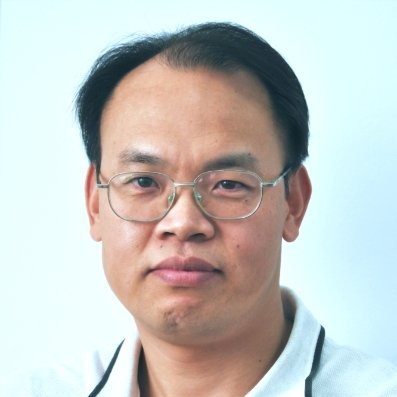
Dr. Baosong Ma
Professor
School of Civil Engineering
Sun Yat-Sen University
Formerly: Professor
China University of Geosciences (Wuhan)

Dr. Yvan Beliveau
Professor Emeritus of Building Construction
College of Architecture and Urban Studies
Virginia Tech

Dr. Carlos Caldas
Gerard A. Rohlich Regents Professorship in Civil Engineering
Maseeh Department of Civil, Architectural and Environmental Engineering
Cockrell School of Engineering
The University of Texas at Austin

Dr. John Gambatese
Professor
Organizations
Civil and Construction Engineering
College of Engineering
Oregon State University

Dr. Charles Jahren
Morrill Professor Emeritus of Civil, Construction and Environmental Engineering
College of Engineering
Iowa State University

Dr. Jeffrey Russell
Vice Provost for Lifelong Learning
Dean of Division of Continuing Studies
University of Wisconsin-Madison
Formerly: Professor and Chair
Department of Civil and Environmental Engineering
University of Wisconsin-Madison

Dr. Ray Sterling
Professor Emeritus and Research Professor
Trenchless Technology Center
Louisiana Tech University
Formerly: Contractors Educational Trust Fund Professor of Civil Engineering
Director of the Trenchless Technology Center
Louisiana Tech University

Dr. Dongping Fang
Professor
Director of Institute for Future Cities and Infrastructures
Department of Construction Management
School of Civil Engineering
Tsinghua University
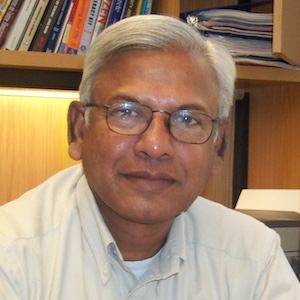
Dr. M.S. Mathews
Past Director
Alpha College of Engineering-Chennai
Formerly: Professor
Chair of Department of Civil Engineering
Indian Institute of Technology-Madras

Dr. Miroslaw “Mirek” Skibniewski
Professor of Civil and Environmental Engineering
Maryland Robotics Center
Department of Civil and Environmental Engineering
A. James Clark School of Engineering
University of Maryland

Dr. Carl T. Haas
University Research Chair
Professor
Chair of the Civil and Environmental Engineering Department
University of Waterloo
Formerly: Professor
Clyde E. Lee Endowed Fellow in Transportation Engineering
Director of the Center for Construction Industry Studies
Cockrell School of Engineering
University of Texas at Austin